
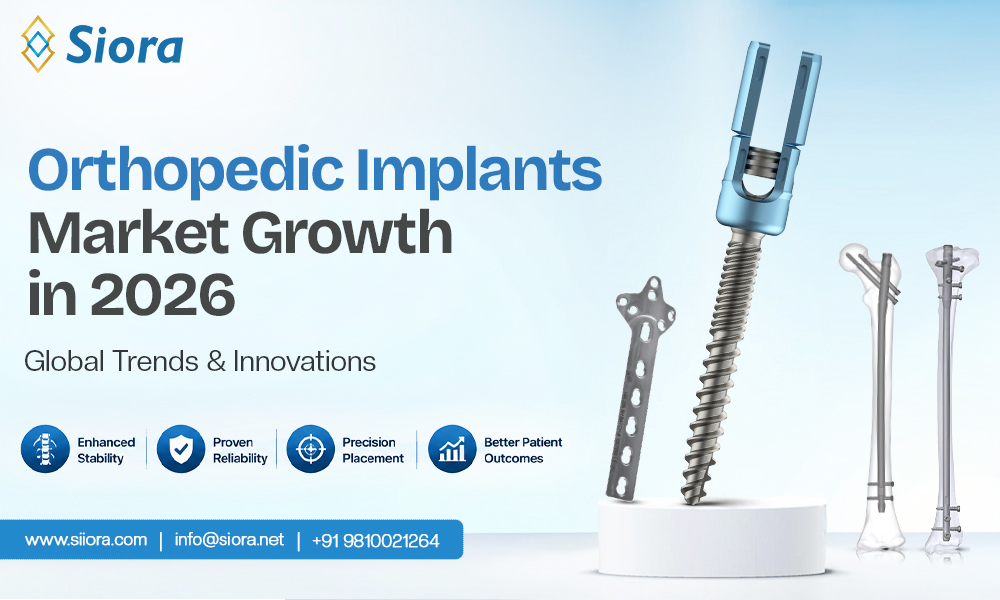
The orthopedic implants industry is entering a transformative phase in 2026. Driven by technological advancements, an aging population, and increasing awareness about musculoskeletal health, the global market continues to expand at a remarkable pace. From trauma fixation devices and joint replacement systems to spine implants and sports medicine solutions, orthopedic innovations are reshaping patient care worldwide.
Healthcare providers today are looking beyond traditional treatment approaches. They seek implants that offer improved outcomes, faster recovery, and long-term reliability. As a result, manufacturers are investing heavily in research and development to meet these evolving expectations.
Rising Demand for Orthopedic Implants Worldwide
One of the primary factors contributing to market growth in 2026 is the rising incidence of orthopedic disorders. Conditions such as osteoarthritis, osteoporosis, spinal deformities, and traumatic injuries continue to increase globally.
The growing elderly population is also playing a crucial role. As people live longer and remain active later in life, the need for joint replacements, fracture fixation devices, and spine stabilization systems is increasing steadily. Additionally, road accidents, sports injuries, and workplace trauma continue to fuel demand for advanced orthopedic solutions.
Emerging economies in Asia-Pacific, Latin America, and the Middle East are witnessing significant growth due to improving healthcare infrastructure and greater access to specialized orthopedic care.
Innovation Continues to Shape the Industry
Technological innovation remains at the heart of the orthopedic implants market in 2026. Manufacturers are introducing next-generation products designed to enhance precision, durability, and patient comfort.
Patient-Specific Implant Solutions
Customization has become a major trend. Patient-specific implants, developed using advanced imaging technologies and digital planning tools, are helping surgeons achieve better anatomical fit and improved surgical outcomes.
These personalized solutions reduce complications while supporting quicker rehabilitation.
Expansion of 3D Printing Technology
3D printing is no longer an emerging concept; it is now an integral part of orthopedic manufacturing. The technology enables the production of highly complex implant geometries that closely mimic natural bone structures.
Porous implant surfaces manufactured through additive manufacturing also promote improved bone ingrowth and long-term stability.
Smart and Connected Implants
Another notable development is the introduction of smart orthopedic implants. These advanced devices incorporate sensors capable of monitoring healing progress, implant performance, and patient activity levels.
Real-time clinical data allows physicians to make more informed decisions during postoperative care, ultimately improving patient outcomes.
Growing Preference for Minimally Invasive Procedures
Patients increasingly prefer minimally invasive surgical techniques due to reduced pain, shorter hospital stays, and faster recovery periods. This trend is influencing implant design significantly.
Orthopedic companies are developing low-profile plates, advanced intramedullary nails, and minimally invasive fixation systems that support less invasive surgical approaches without compromising stability.
As healthcare systems focus on reducing overall treatment costs, minimally invasive procedures are expected to remain a strong market driver throughout 2026 and beyond.
Sustainability and Quality Compliance Gain Importance
Regulatory compliance and product quality continue to be major priorities within the orthopedic industry. Manufacturers are strengthening quality management systems and adhering to internationally recognized standards to ensure product safety and reliability.
At the same time, sustainability initiatives are gaining momentum. Companies are exploring environmentally responsible manufacturing practices, optimizing packaging processes, and improving supply chain efficiency to reduce their environmental footprint.
Future Outlook
The future of the orthopedic implants market appears highly promising. Continuous innovation, expanding healthcare access, and increasing patient expectations will continue to drive industry growth.
Manufacturers that focus on advanced technologies, stringent quality standards, and patient-centered product development are likely to lead the global market. As 2026 progresses, orthopedic implants will continue to play an essential role in improving mobility, restoring function, and enhancing the quality of life for millions of patients worldwide.

