
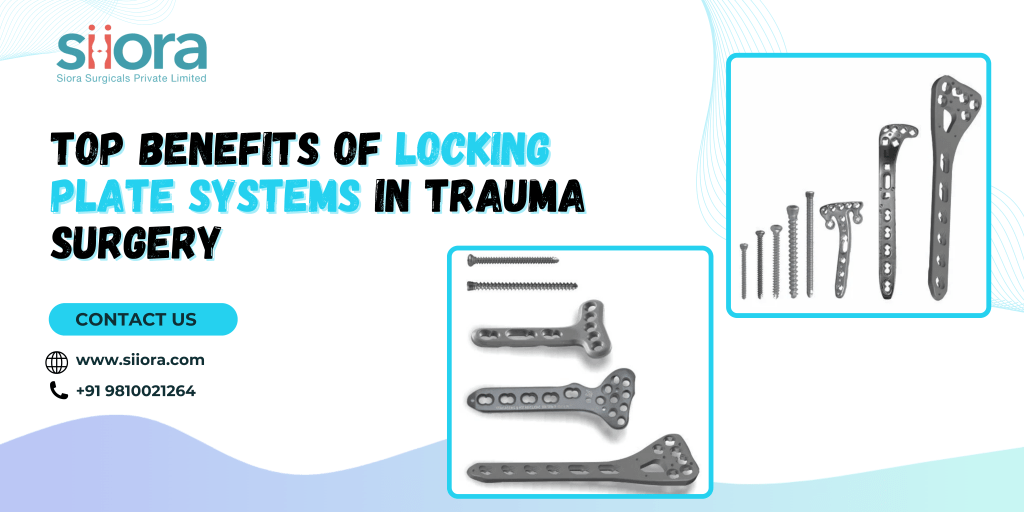
Modern advancements in orthopedic trauma surgery have revolutionized patient outcomes, with one of the most significant innovations being the locking plate system. These systems have transformed fracture fixation by providing greater stability, reduced healing complications, and improved patient recovery. Locking plate technology has become a preferred choice for orthopedic surgeons worldwide due to its biomechanical advantages over traditional fixation methods. Let’s explore the top benefits of locking plate systems in trauma surgery.
What Are the Advantages of Locking Plate System in Orthopedic Surgery?
Enhanced Stability and Fixation
Locking plate systems provide superior stability compared to conventional plating techniques. Traditional plates rely on friction between the bone and the plate for stability, which can sometimes compromise bone integrity. In contrast, locking plates utilize screws that lock into the plate itself, creating a rigid construct that does not rely solely on bone compression. This feature is particularly beneficial in osteoporotic bones, where achieving strong fixation is challenging.
Minimized Risk of Implant Failure
One of the most significant risks in trauma surgery is implant failure, which can lead to complications like nonunion or malunion of fractures. Locking plates distribute mechanical forces more evenly, reducing the risk of screw loosening or implant breakage. This advantage is crucial in complex fractures or weight-bearing bones, where maintaining alignment is critical.
Preservation of Blood Supply and Bone Integrity
Conventional plating techniques often require tight compression of the plate against the bone, which can disrupt the periosteal blood supply. Locking plate systems, however, function as internal fixators, maintaining a gap between the plate and bone. This design preserves periosteal circulation, which is essential for bone healing and reduces the risk of bone necrosis.
Ideal for Osteoporotic and Fragile Bones
Elderly patients or individuals with osteoporosis often experience poor bone quality, making traditional screw fixation less effective. Locking plates do not depend on bone density for stability, as the screws interlock with the plate to form a fixed-angle construct. This feature ensures that even in weak bones, fixation remains strong, reducing the likelihood of implant loosening or failure.
Reduced Need for Bone Contact and Compression
In some fractures, particularly those with comminution (multiple fragments), direct compression between the plate and the bone can further disrupt the fracture site. Locking plate systems allow surgeons to stabilize fractures without excessive bone contact, reducing soft tissue damage and promoting biological healing.
Improved Early Mobilization and Recovery
Patients undergoing fracture repair with traditional plating methods may experience prolonged immobilization due to concerns about implant stability. With locking plates, the strong fixation enables early weight-bearing and mobility, which significantly reduces muscle atrophy, joint stiffness, and overall rehabilitation time. Faster recovery translates to a better quality of life for patients.
Versatile Application Across Multiple Fracture Types
Locking plate systems are highly versatile and can be used for various anatomical locations and fracture patterns, including:
- Long bone fractures (femur, tibia, humerus)
- Periarticular fractures (around joints)
- Complex fractures in osteoporotic bones
- Open fractures requiring external stabilization
This adaptability makes locking plates a go-to solution for orthopedic surgeons handling a wide range of trauma cases.
Lower Risk of Infection and Soft Tissue Complications
Traditional plating techniques may require extensive dissection to achieve plate-bone contact, increasing the risk of soft tissue damage and infection. Locking plates, designed for minimally invasive placement, reduce surgical exposure and tissue disruption, leading to lower infection rates and better wound healing.
Reduced Revision Surgery Rates
Because locking plates provide superior mechanical stability and enhanced bone healing, the need for secondary surgical procedures, such as hardware removal or revision fixation, is significantly reduced. This results in fewer hospital visits, lower medical costs, and less discomfort for the patient.
Surgeon-Friendly Design and Ease of Application
Locking plate systems often come with pre-contoured designs that match the natural anatomy of bones, making surgical procedures more efficient. Additionally, their fixed-angle construct simplifies screw placement, especially in challenging cases where traditional screws might strip out or loosen over time.
Conclusion
The locking plate system has revolutionized trauma surgery, offering unmatched stability, reduced healing complications, and improved patient outcomes. Its ability to provide strong fixation, preserve blood supply, and enhance recovery makes it a superior choice in modern orthopedic trauma care. As technology continues to evolve, locking plates will remain an essential tool in the hands of skilled surgeons, ensuring better recovery and improved quality of life for patients worldwide.
To explore cutting-edge healthcare solutions including trauma implants and instruments, register for the FIME Show 2025.
 Working of MRI for Orthopedis